Today in JMO teaching we talked about the management of acute heart failure in the ED, specifically the management of acute pulmonary oedema or “SCAPE” (Sympathetic Crashing Acute Pulmonary Edema).
I have attached the clinical vignette, tutorial notes and some interesting references for further reading.
FIBs, medical error, resuscitation directives and ‘where the *@#! is the intralipid’?!
It is an eerily quiet Tuesday morning in ED. You have just returned from a coffee round to hear the arrest buzzer sound from bed 18. Edna is 89 and is currently unresponsive after an inadvertent intravascular administration of ropivacaine in an effort to analgese her fractured NOF.
She is unresponsive, hypotensive and tachycardic with a broad, erratic rhythm on the monitor. She subsequently suffers a generalised seizure, following which she becomes apnoeic and arrests into pulseless VT.
You commence ALS, successfully resuscitate her with sodium bicarb and IV lipid emulsion and transfer her to ICU to await her total hip replacement.
Key Learning Points: Technical
Local Anaesthetic toxicity is real! Know weight-based maximum doses and fully consent patients/family for complications prior to undertaking any procedure.
Manifestations result from sodium channel blockade and include neurological sequelae including tinnitus, perioral numbness, confusion, drowsiness, loss of consciousness and seizures, closely followed by cardiovascular complications including hypotension, dysrhythmias and cardiac arrest.
The key investigation is the 12-lead ECG, which may show signs of Na+ channel blockade: terminal R >3mm in aVR, broad QRS >100ms in II, R/S ratio >0.7 in aVR.
Treat dysrhythmias with sodium bicarb eg 2mmol/kgl IV bolus and repeat until cardiac stability is restored.
In refractory arrest, use IV lipid emulsion 1-1.5ml/kg bolus repeat at 3-5mins x 1-2 then 0.25ml/kg/min IVI.
Lipid emulsion 20% can be found in the drug cupboard in AAA, resus and fast track. Dosing information should be attached to the bottle but if not (as in this case!) please contact poisons for advice.
Key Learning Points: Non-Technical
Role allocation can be very tricky when a critically ill patient is sprung upon us, outside of a familiar resus environment. Have a plan to manage role delineation on-the-fly. Consider pausing to allocate roles; use labels eg stickers/lanyards in acute situations even outside of resus – perhaps keep some on the resus trolleys for this reason. Allocating roles ensures team members are accountable and focused and ensures important tasks are not missed eg time-keeping, drug-drawing.
Communicate with and listen to the Team Leader. They will use key phrases to update the team in language that is universally understood. For example, ‘I think we are dealing with local anaesthetic toxicity’, ‘I want to prioritise the IV lipid emulsion’. Use closed-loop communication to inform the TL that tasks have been completed, ‘the defib pads are on, shall I proceed with rhythm check?’.
Feel empowered as a team member to speak up if you know something that you feel the rest of the team has overlooked eg the location of important medications in the department. As the TL be open to suggestions and regularly update your team and invite feedback so as to avoid lost communication of vital information.
Think about the ethics around over-riding a ‘do-not-resuscitate’ directive in the event of an unexpected, iatrogenic event. If it is clear the directive has been drawn-up with potential iatrogenic events in mind, the patient’s wishes should be respected. Consider incorporating this element into your advanced-care-planning discussions with family and relatives. When consenting for nerve blocks, always disclose risks of LA toxicity including possible cardiac arrest and where possible discuss with elderly, frail patients/families their wishes in the event of cardiac arrest as a result of a procedural complication. By planning in advance we can avoid fraught decision making in the heat of the moment. Remember, it is natural as care-givers to want to correct an inadvertent error by over-treatment. This is not a reasonable excuse for over-riding an advanced care directive. We must always be acting in the patient’s best interests.
Today Brigitte the palliative care CNC came to talk to us about palliative care services and referral processes in our area, and provide some resources to assist us with having end-of-life conversations and prescribing in palliative care.
Main learning points for me were:
We can refer to community palliative care at the time of discharge from ED by faxing a referral form, and we should be doing this if appropriate.
We do not have an out of hours on-call palliative care service currently at this hospital.
Prescribing protocols for patients requiring end-of-life medications can be found in the ‘policies and procedures’ desktop icon -> 7. Medications -> ‘Care of the imminently dying adult inpatient’. The opioid conversion chart is also found within this folder.
Starting the conversation about goals of care/ end of life wishes and needing to bail out, is better than not starting at all and will help the next person who attempts it. Don’t persevere with a conversation that is failing.
Brigitte kindly sent me some useful resources relating to today’s session. Her teaching powerpoint, some communication skills resources and community palliative care referral form can be found below.
“A 24 year old Man was brought into ED by ambulance after being found unresponsive at home by his Girlfriend.
He had been out with mates the night before and returned in the early morning intoxicated with alcohol and cocaine.
He appeared ‘slate blue’ in colour with RR 40, sats 85% 15L NRBM, HR 110, BP 150/90, GCS 8, T 37.1, BSL 18.”
VBG
pH 7.07
pCO2 58
pO2 20
HCO3 16
BE -12.4
K+ 6.3
Chloride 114
Glucose 19
Lac >20
OxyHb 12.0%
Deoxyc Hb 0.0%
CarboxyHb 4.2%
MetHb 63.9%
“He was diagnosed with methaemaglobinaemia secondary to likely benzocaine ingestion (used as a cutting agent in cocaine). He was treated with methylene blue and intubated for low GCS, then transferred to ICU where he was extubated successfully the next day.”
Key Learning Points
Technical:
Diagnosis
Methaemoglobinaemia occurs when ferrous ions (Fe2+) of haem are oxidized to the ferrous state (Fe3+) and then cannot bind to O2
People may present with knowledge of a congenital methaemaglobinaemia but most acute cases are caused by ingestion of a toxin:
aniline dyes
benzene derivatives
chloroquine
dapsone
prilocaine
metoclopramide
nitrites (nitroglycerin, NO, sodium nitroprusside, sodium nitrate)
sulphonamides
Suspect if patient presents with suspicion of toxic ingestion plus altered mental status, blue/grey cyanotic skin, poor O2 sats unresponsive to O2 administration (classically 85%) and brown/’chocolate’ coloured blood
Treatment
Treat with usual supportive treatment/ resuscitation and follow usual ACLS protocol
Give methylene blue 1-2mg/kg IV stat – this can now be found in the resus drug cupboard
It comes in 50mg/5ml ampoules and should be given neat at 0.1-0.2ml/kg and then repeated once at 30-60mins if MetHb levels are not falling
Call poisons for advice early on 13 11 26
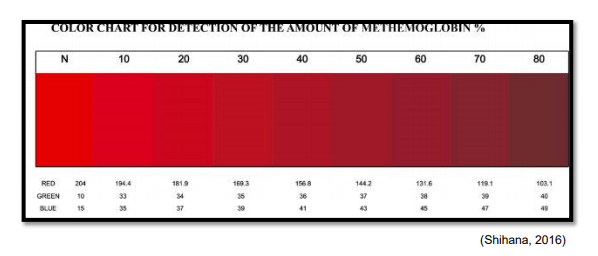
Remember when MetHb concentrations are ‘massive’ you may get an ‘error’ reading on your VBG result. In this case, use the colour chart for the estimation of the MetHb concentration in blood
Non-Technical
Utilise available resources
Protocols for the administration of IV drugs can be found on the L drive: Emergency -> Public -> Clinical Policies and Procedures -> Pharmacology -> Emergency and Intensive Care drug Protocols
Call poisons early on 13 11 26
Communication
Telephone calls to poisons or other specialists: Make sure you know what you are asking for. Is it for hands-on assistance? Or for specific management advice. The team leader should brief you prior to making the call but if you are ensure, feel empowered to ask.
Regular summaries enable the team as a whole to take stock of the current situation and allows the team leader to share his/her clinical reasoning and priorities with the team. It also allows for questions or concerns to be raised by team members.
Ensure all key information is fed back to the team leader and all key decisions are communicated via the team leader. This is especially important when there is more than one senior clinician in the team who may be making decisions. Remember the team leader is the only team member with complete cognitive oversight of the situation.
In Journal Club today we discussed ATOM-2, aka “Massive paracetamol overdose: an observational study of the effect of activated charcoal and increased acetylcysteine dose” Chiew A, Isbister G, Kirby K, Page C, Chan B and Buckley N Clinical Toxicology 2017
This was an observational study examining prospective and retrospective data gathered by Poisons Information Centres in NSW and Queensland.
The study looked at patients 14 years and older reporting massive paracetamol overdose (“massive” was defined by these
researchers as >40g), ingested over a period of time not exceeding 8 hours.
They asked the questions:
Is the use of activated charcoal associated with reduced
hepatotoxicity?
Is increased N-acetyl cysteine (NAC) dosage associated with
reduced hepatotoxicity?
As a bit of background, charcoal used to be given to a
much larger proportion of deliberate self poisoning patients than we give it to
currently. Its use then fell out of favour due to concerns over
aspiration-related pneumonitis and the belief that early NAC will be liver
& life saving, thereby making any benefits of charcoal unnecessary. Recently however, “massive” paracetamol overdose is
becoming more common and the risks of aspiration of activated charcoal have
also been questioned by some researchers.
Data from 200 patients were examined, all of whom
had taken more than 40g paracetamol within an 8 hour period.
Outcomes included:
Initial paracetamol ratio (this is the paracetamol level divided by the treatment paracetamol level on the nomogram that that time)
Hepatotoxicity (ALT > 1000)
Liver transplant
Death
The study found that patients who had activated charcoal within 4h had significantly lower paracetamol ratios than those who did not have charcoal and a lower risk of hepatotoxicity (although this is difficult to separate from the effect of NAC in those patients who received it). An increased dose of NAC (usually doubling the dose in the 3rd bag) was associated with significantly lower risk of hepatotoxicity.
Interestingly, just over 25% patients who developed hepatotoxicity had NAC commenced within 8 hours of
ingestion. These patients all had paracetamol ratios greater than 2. One patient required a liver transplant
despite NAC commencing within 2.5 hours.
There was 1 death but it was unrelated to paracetamol.
Conclusions
None of the patients receiving activated charcoal within 4 hours developed severe liver injury.
Increasing the dose of NAC significantly decreased the odds of developing hepatotoxicity in those with an initial paracetamol ratio of more than 2.
Several patients who received NAC within 8 hours had severe liver injury which supplies evidence against our preconception that NAC within 8 hours is 100% effective.
Limitations
Some definitions are not universally accepted eg “massive” overdose and “hepatotoxicity”
The dose of activated charcoal given was not specified
Treatments were not randomly allocated
Influence of reporting bias to Poisons service
Statistical power limited (only a small number of patients develop hepatotoxicity despite NAC)
Take-homes
Think about activated charcoal in pxs with massive OD (this series looked at >40g but there is little evidence for what defines “massive”)
Discuss patients with a high paracetamol ratio with Poisons Information, regarding indications for increased dose NAC
More work needs to be done to look at the time before which charcoal is beneficial, as well as which dose of NAC is ideal and at what time.
Today we talked about
paediatric appendicitis scores, appendicitis scores and clinical decision
scores and rules in general.
The article we looked at was Development and Validation of a Novel Paediatric Appendicitis Risk Calculator (pARC) Kharbanda AB, Vazquez-Benitez G, Ballard DW, et al. PEDIATRICS. 2018 Apr;141(4):e20172699. (if you would like a copy please let me know.)
In summary, this study
developed a Paediatric Appendicitis Risk Calculator (pARC) using clinical
findings in a cohort of normally well children presenting to ED with abdominal
pain and then validated it using a separate cohort of patients, as well as
comparing it to the existing Paediatric Appendicitis Score. The conclusions we
reached from our discussion of the article were:
The
description of the methodology was confusing and we did not feel we would be
able to replicate it based on what was described in the article (one of the
“acid tests” for an article.)
The article did not tell us what the components of the calculator they derived actually were! This is probably the biggest frustration with this article. It states: “The pARC is not intuitive and requires sophisticated calculations… The pARC can be easily programmed and integrated within the electronic health record.” Not terribly useful to staff outside of the hospitals the author plans to implement his calculator in!
We entered into some
interesting discussion around clinical decision rules, summarized below:
Most clinical decision rules (think PECARN/CHALICE/HEART…. almost anything) condense findings on history and examination that we would all obtain during a routine assessment into a list and allocate a quantitative value to the presence or absence of those findings.
Most clinical decision rules are too hard to remember in full. Yes you can plug them into an app but still….
We usually know who has appendicitis (or a severe head injury, or ischaemic chest pain) after performing an adequate clinical assessment.
Possibly more importantly, we usually know who doesn’t have these conditions after assessing them.
The difficult patients are:
The “maybes” ie the intermediate scoring patients
Many clinical decision rules are NOT useful for this intermediate group of patients.
So if clinical decision rules confirm what we already know and don’t help us when we don’t know, do they have any use at all?
Potentially.
They are sometimes helpful to convey information to other teams
Eg convincing the surgeon they have appendicitis because they score highly on the Alvarado/PAS score
They can be useful in rationalizing imaging and investigations
Eg deciding NOT to image low risk patients (and in some cases, eg high risk appendicitis patients if admission & OT is more appropriate)
They can be useful for developing a standardised guideline for conditions in which there is a large variation in practice within and between departments (ie calculate score then admit/investigate/discharge based on score)
They can be useful in reassuring ourselves when our gut feeling is “this is not appendicitis” that a patient is, in fact, low risk and ok to go home!
Any other thoughts on these issues or suggestions for Journal Club articles, please let me know.
1. Perner A, Cecconi M, Cronhjort M, Darmon M, Jakob SM, Pettilä V, et al. Expert statement for the management of hypovolemia in sepsis. Intensive Care Med. 2018 Apr 25;44(6):791–8.
Here is the pre-reading for the Education Session on the Ambu aScope.
Objectives for the session:
1. Indications for endoscopic airway instrumentation
(1) looking at airways (eg. burns, FBs, stridor)
(2) awake fibreoptic intubation
(3) intubation through a supraglottic device following failed intubation
2. Discussion of recent cases
3. Patient preparation
4. Airway local anaesthetic topicalisation
5. Environment preparation
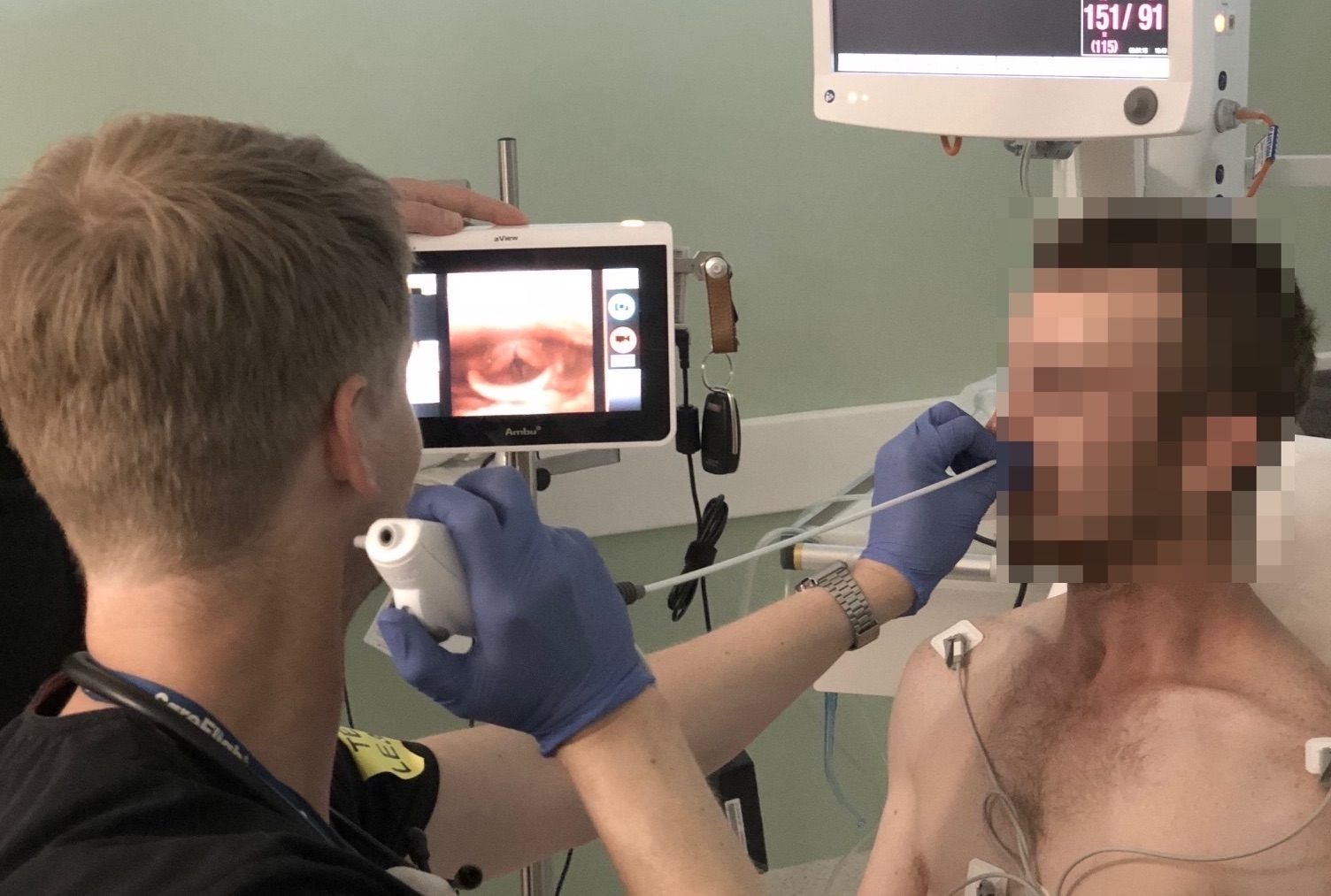
6. Use of the aScope
Device familiarisation
The aView Monitor:
One of the consultants got intubated by his registrars. It shows the challenge of topicalisation in a non-sedated patient who has not received an antisialogogue:
Further comments and reflection by the intubatee are documented here
The retrieval service (Greater Sydney Area HEMS) has been using the aScope for several years and has some useful aides-memoire and checklists available below.