
Education Session: Shock
Knowledge Review Quiz here
Cases we discussed are here

Causes of elevated LACTATES
Venue Ultrasound : Auto VTI Demo
Femoral vs radial arterial lines, and non-invasive vs invasive BP measurement (PulmCrit): http://emcrit.org/pulmcrit/a-line/
Other references:
1. Perner A, Cecconi M, Cronhjort M, Darmon M, Jakob SM, Pettilä V, et al. Expert statement for the management of hypovolemia in sepsis. Intensive Care Med. 2018 Apr 25;44(6):791–8.
2. Marik PE. Fluid Responsiveness and the Six Guiding Principles of Fluid Resuscitation. Critical Care Medicine. 2016 Oct;44(10):1920–2.
3. Dynamic LVOTO: https://echo.anesthesia.med.utah.edu/dynamic-obstruction/
Posted in Education
Education Session: Ambu aScope
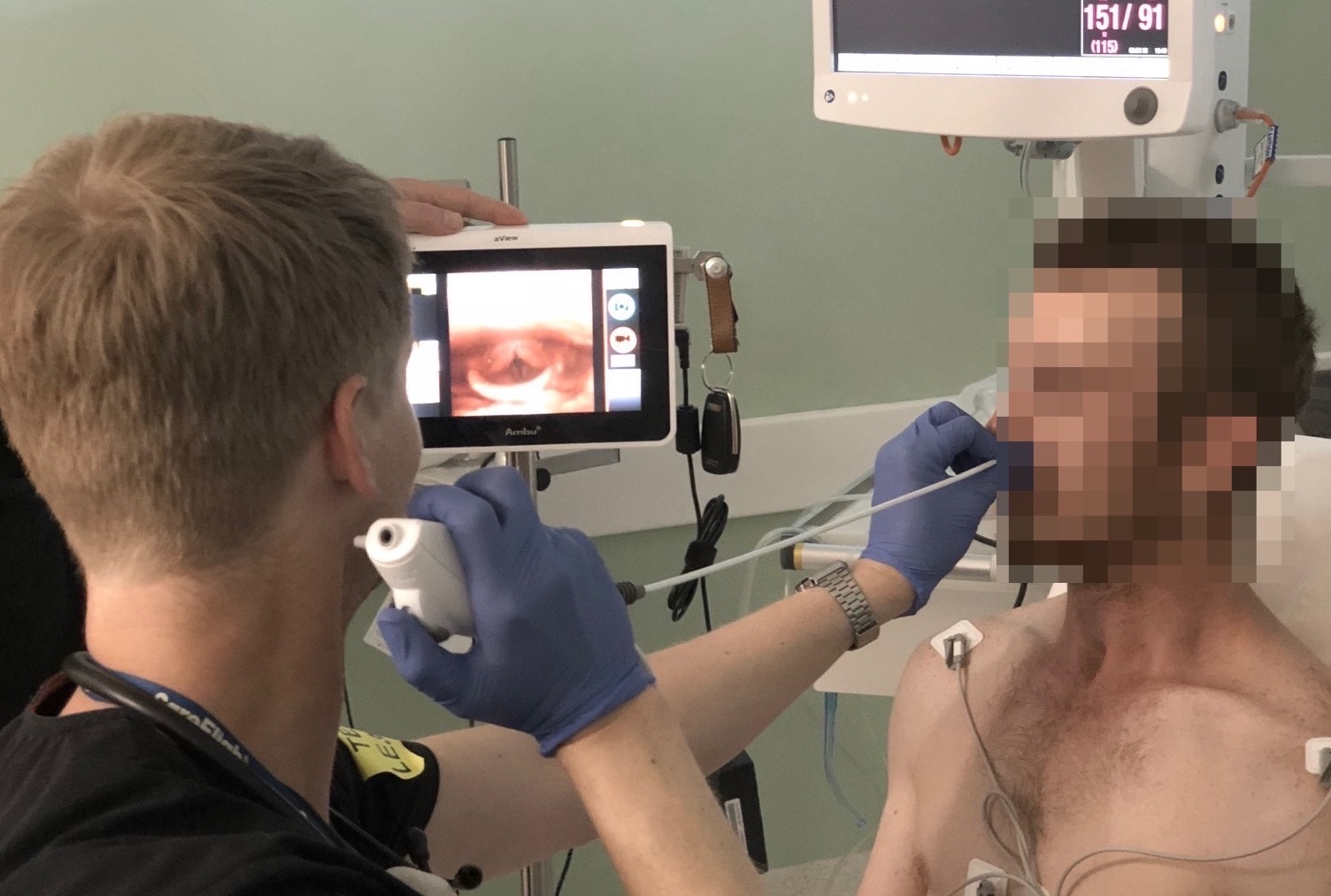
Here is the pre-reading for the Education Session on the Ambu aScope.
Objectives for the session:
1. Indications for endoscopic airway instrumentation
(1) looking at airways (eg. burns, FBs, stridor)
(2) awake fibreoptic intubation
(3) intubation through a supraglottic device following failed intubation
2. Discussion of recent cases
3. Patient preparation
4. Airway local anaesthetic topicalisation
5. Environment preparation
6. Use of the aScope
Device familiarisation
The aView Monitor:
One of the consultants got intubated by his registrars. It shows the challenge of topicalisation in a non-sedated patient who has not received an antisialogogue:
Further comments and reflection by the intubatee are documented here
The retrieval service (Greater Sydney Area HEMS) has been using the aScope for several years and has some useful aides-memoire and checklists available below.


Articles of interest
Posted in Journal Club
NIV in ED
My talk from today:
Australian Prescriber Feb 2017
Some articles which may be of interest:
Should pulse pressure influence prescribing?
Antimicrobial use and resistance in Australia
Posted in Journal Club
Drowning
My presentation from today looking at basics of drowning, with a link to the flowchart from Tintinalli.
Toxinology
Powerpoints of my presentations today, giving an overview on toxinology.


 Beaches Emergency Team